The Hidden Setting Blocking PO Flow and the $100K Day Fix

Every operator knows the feeling: sales drift down, POs soften, and nothing in Vendor Central looks obviously wrong. You double-check inventory, lead times, pricing, and catalog status. Everything appears normal, yet the business still slides.
That was the situation a consumer brand brought to PRG in 2025. Their top ASINs looked available, their dropship operations were healthy, and historical top sellers were still getting traffic. But their weekly PO dollars kept eroding, ultimately hitting their lowest levels since Q1.
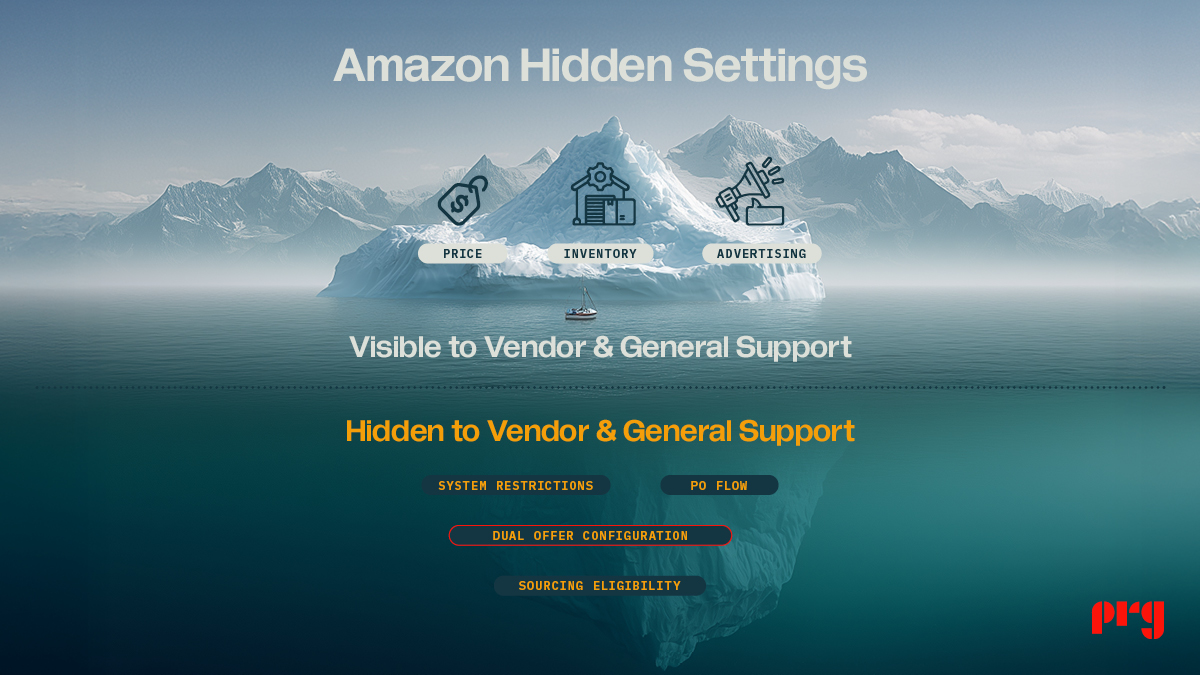
The turning point came when PRG uncovered a back-end constraint that neither the brand nor Amazon’s general support paths could identify: a missing “dual offer” configuration. On paper, the catalog was eligible for both Vendor PO and dropship. In reality, dozens of ASINs were silently restricted to direct fulfillment only.
The fix unlocked one of the strongest PO days the brand had seen since July 2024: ~$100,000 in POS in a single day, versus the typical $12–15K baseline.
The Problem:
A Hidden Constraint with Big Downstream Impact
What “Dual Offer” Actually Means
In Amazon’s vendor ecosystem, a dual offer allows an item to be sourced by both:
- In‑network Vendor PO (traditional wholesale)
- Direct fulfillment (dropship)
It’s a simple setting (not visible to vendors) that determines whether Amazon’s automated buying systems consider an ASIN eligible for PO creation.
When the Issue Started
The brand began noticing softening POs and PO activity around March/April. High velocity ASINs that historically anchored the assortment were going out of stock via in network sourcing, even though inventory was available on the vendor side.
Two symptoms stood out:
- Weekly PO dollars trended down despite stable demand.
- Amazon deprioritized historical best sellers, letting them sit OOS even while DF inventory flowed normally.
Nothing visible in Vendor Central suggested a constraint — which made diagnosis slow and challenging.
The Diagnosis:
Confirming a Setting No One Could See
PRG escalated through a new Amazon‑side account manager. The AM confirmed that many key ASINs were not marked as “dual offer.” They were DF‑only, preventing Amazon from issuing POs even though the catalog appeared healthy externally.
Why it was “hidden”:
- Vendors cannot view or edit the dual-offer flag, so everything looked correct on the brand’s side.
- Amazon frontline support did not recognize the terminology, making standard ticket escalation ineffective.
Once the back-end explanation surfaced, the path forward became clear.
The Action:
A Structured, Controlled Rollout
- Engaged an Amazon account manager with back‑end access.
- Validated dual‑offer status as the gating issue suppressing PO flow.
- Identified the first 10 ASINs for outsized impact.
- Partnered with the AM to flip the setting for the test group.
- Monitored the next Tuesday PO cycle to verify ordering behavior.
- Expanded to a broader assortment with a prioritized list for bulk update.
This controlled activation avoided system shocks and made attribution clean.
The Outcome:
A Rapid Recovery and Clear Operational Signal Lift
The results were immediate and unambiguous.
- Peak day POS hit ~$100,000, versus the usual $12–15K range.
- The brand recorded its largest PO since July 2024.
- 9 out of the 10 test ASINs were ordered, many for the first time in nearly a year.
- Early indicators showed improved Prime coverage and faster delivery speeds, thanks to in-network sourcing returning online.
Even more importantly, the team restored confidence in both the catalog and the operational path for scaling the fix.
Lessons for Operators:
What Every Brand Should Watch
This case reinforced a pattern we see often: when demand is stable but PO flow declines, the root cause is usually structural, not commercial. Here are the takeaways we recommend to every e-commerce operator:
Operators’ Lessons
- If PO volume collapses but DF looks stable, investigate hidden sourcing constraints.
- Symptoms matter — a gradual drop in PO value with no visible catalog flags is a major signal.
- Escalation is a capability — some issues require an AM with direct access to vendor back-end settings.
A Repeatable Diagnostic Checklist
If you see similar symptoms, start here:
- Escalate to an Amazon account manager with back-end access (not standard support).
- Verify any sourcing related settings, including dual-offer eligibility.-related settings
- Review ASINs showing unexpected OOS behavior despite available vendor inventory.
- Check Tuesday PO roll patterns, which often reveal whether buying logic is constrained.
- Build a priority list to test fixes with a small group before expanding.
These steps prevent misdiagnosis and shorten the time to recovery.
The Bigger Picture
This case shows how subtle system-level blockers can restrict Amazon performance for months — and how quickly the right operational fix can restore growth.
Many brands attribute declining POs to demand softness or budget shifts when the real issue lies deeper in Amazon’s supply-side automation. A structured diagnostic approach and the right escalation path can unlock significant gains without changing pricing, advertising, or promotions.